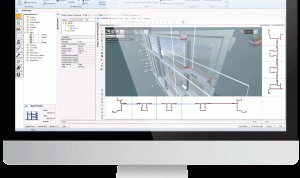
Map making softwares are revolutionizing the way we visualize and interact with geographical data. Whether you’re an urban planner, a business analyst, or simply a map enthusiast, these powerful tools empower you to create detailed and accurate maps that cater to your specific needs. With a diverse array of options available today, ranging from user-friendly applications to professional-grade technologies, the world of map making is more accessible than ever.
As we explore the landscape of map making softwares, we’ll delve into their evolution, key features, and applications across various industries. Discover how these innovative tools are enhancing user experiences through intuitive interfaces and advanced integrations, ensuring that you can create maps that tell your story effectively.
Overview of Map Making Softwares
Map making software has revolutionized the way we visualize and analyze geographic data across various fields. From urban planning to environmental management, these tools empower professionals to create accurate and informative maps that enhance decision-making processes. As technology has advanced, a plethora of map making solutions have emerged, catering to diverse needs.
The market is filled with popular map making software that serve different purposes. Some of the most notable include:
- ArcGIS
- QGIS
- MapInfo
- Google Earth Pro
- Mapbox
Over the years, map making technologies have evolved significantly. Initially rooted in manual cartography, advancements in software development, satellite imagery, and Geographic Information Systems (GIS) have transformed the field. Today, users can create interactive maps with layers of data, offering real-time updates and enhanced analytical capabilities.
Features of Map Making Softwares
Effective map making software must possess several key features that cater to the needs of professionals. Essential functionalities include:
- Data integration capabilities
- Customizable map layers
- Real-time collaboration tools
- Geocoding and reverse geocoding
- Advanced analytics tools
Professional-grade mapping tools differentiate themselves by offering sophisticated functionalities that cater to complex requirements, such as:
- 3D terrain visualization
- Automated data updates
- Extensive APIs for customization
- Support for large datasets
- Advanced geospatial analysis
To illustrate the differences, here is a comparison table of the features of the top 5 map making softwares:
| Software | Data Integration | Real-time Collaboration | 3D Visualization | Geospatial Analysis |
|---|---|---|---|---|
| ArcGIS | Yes | Yes | Yes | Advanced |
| QGIS | Yes | No | Limited | Advanced |
| MapInfo | Yes | No | No | Standard |
| Google Earth Pro | Basic | Yes | Yes | Basic |
| Mapbox | Yes | Yes | Yes | Advanced |
Applications of Map Making Softwares
Map making software is integral to numerous industries. Industries that heavily rely on these tools include:
- Urban Planning
- Transportation and Logistics
- Environmental Conservation
- Healthcare
- Telecommunications
In urban planning and development, map making software aids in visualizing infrastructure, land use, and population density, facilitating better planning strategies. Successful case studies showcasing the use of mapping tools in business include:
- Targeting marketing campaigns with geospatial data in retail
- Optimizing delivery routes in logistics
- Mapping disease outbreaks for effective healthcare responses
- Urban redevelopment projects using spatial analysis
User Experience and Interface Design
User interface is crucial in map making software, as it significantly affects the user’s ability to navigate and utilize the software effectively. Best practices for designing user-friendly mapping applications include:
- Intuitive navigation menus
- Clear labeling of tools and functionalities
- Responsive design for various devices
- Accessible help documentation
To enhance user experience in map making software, consider these recommendations:
- Incorporate feedback mechanisms
- Utilize consistent color schemes
- Add tutorials and guided tours
- Ensure fast load times and performance
Advanced Technological Integrations

AI and machine learning are increasingly integrated into map making software, enhancing features like predictive analytics and automated data processing. Geographic Information Systems (GIS) play a pivotal role in improving mapping capabilities by providing spatial context and analytical tools. Complementary technologies such as Virtual Reality (VR) and Augmented Reality (AR) are being explored to create immersive mapping experiences that engage users in new ways.
Challenges in Map Making
Users often face common challenges when utilizing map making software. These challenges can include:
- Complexity of software tools
- Data accuracy and reliability issues
- Integration difficulties with existing systems
Inaccurate data significantly impacts the map making process, leading to flawed analyses and misinformed decisions. Potential solutions for overcoming mapping challenges include:
- Regular data validation and updates
- Comprehensive training for users
- Utilizing cloud-based solutions for better integration
Future Trends in Map Making Softwares
Emerging trends are reshaping the future of map making technologies. These trends include the increased adoption of machine learning for predictive mapping and the growing importance of real-time data integration. Predictions suggest that over the next decade, map making software will evolve towards more user-centric designs, with enhanced functionalities tailored to specific industries. Open-source mapping tools are also expected to influence the industry, fostering innovation and collaboration among developers and users alike.